Today’s security teams aren’t short on data – they’re overwhelmed by it. Logs stream endlessly from cloud platforms, endpoints, networks, identity systems, and hundreds of additional sources. Each promises insight. Collectively, they create noise. The stakes are rising fast: in 2025, the average cost of a data breach in Canada reached CA$6.98 million, a 10.4% year-over-year increase reflecting both escalating attacker sophistication and the growing consequences of delayed or missed detections.
Modern SIEM platforms are purpose-built for centralization and correlation – matching patterns across disparate data sources to surface meaningful signals. They are not, however, designed to be data manipulation or conformance tools. Feeding them poorly structured, unprioritized telemetry doesn’t unlock their strengths; it buries them. Without intentional architecture, disciplined log prioritization, and strong operational governance, more data simply amplifies cost and complexity. The sections that follow lay out a practical blueprint for regaining control – from pipeline design and data quality through cost optimization and use-case engineering – all with a single objective: ensuring the right security data reaches the right people, at the right time, with the clarity required to act decisively.

Evolving Landscape of SIEM & Data Platforms
SIEM systems were originally designed for a simpler environment: aggregate logs, apply correlation rules, alert on matches. As attack surfaces expanded and data volumes grew, that model strained under the load. Compounding the challenge, research suggests that between 50% and 83% of SOC alerts are false positives – meaning analysts are routinely triaging noise at precisely the moment speed matters most, particularly as threat actors increasingly leverage AI-powered tactics designed to elude detection by traditional tools and techniques.
Modern tools and platforms blend SIEM with Security Orchestration, Automation and Response (SOAR), User and Entity Behaviour Analytics (UEBA), and AI/ML-driven detection models. The goal: merge signature-based detection with heuristic detection to detect anomalies that static rules miss. In our SOC, for example, ISA Cybersecurity applies these capabilities to automate threat correlation, integrate systems, and orchestrate response. This reduces mean time to detect and respond – and risk. It’s an evolution that transforms SIEM from a traditional log repository into an intelligence hub.
Data Architecture & Pipeline Design
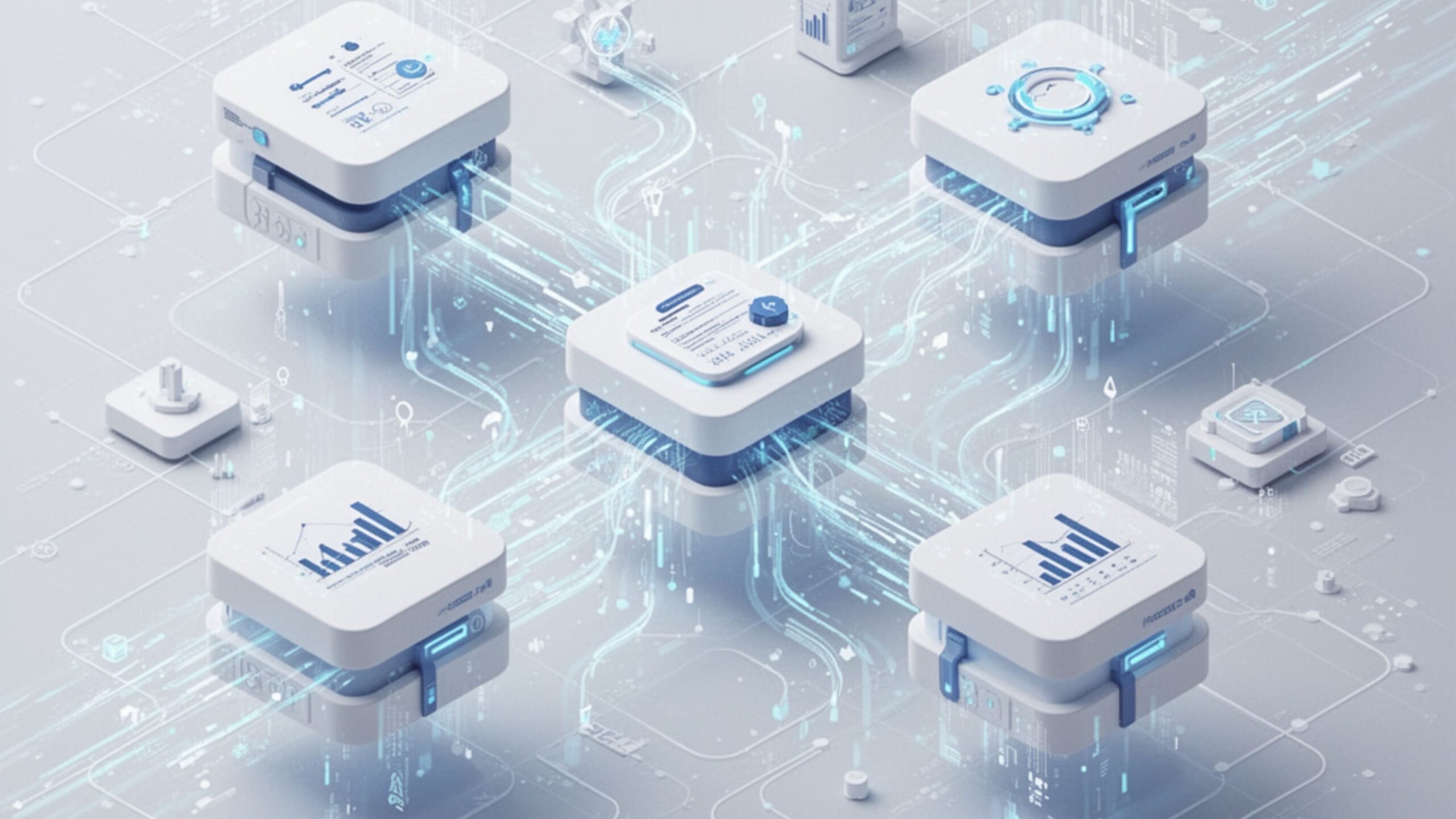
Effective pipeline design rests on several foundational principles: modular ingestion layers that decouple producers from consumers; event buffering to absorb bursts during peak activity; schema-based routing that tags data by context – identity, network zone, endpoint, and so on; and prioritized queues that prevent critical alerts from being delayed by noise. Pipelines also serve a critical infrastructure role beyond data management – providing high availability at the collection layer to support business continuity and disaster recovery requirements. An architecture that fails under load, or lacks redundancy, creates the very visibility gaps that adversaries exploit.
The pipeline tooling landscape has matured significantly. We see three approaches used in implementing pipelines, each with distinct trade-offs.
- Vendor-specific pipelines are increasingly being integrated directly into major security platforms. Vendors such as CrowdStrike and SentinelOne embed upstream data processing to reduce noise and optimize telemetry. These approaches provide tight platform alignment, favouring their parent ecosystems.
- Vendor-agnostic standalone tools offer flexibility for organizations with heterogeneous stacks. Examples include Cribl and DataBahn, which provide pipeline layers to route and transform data across diverse sources and destinations without tying organizations to a specific SIEM vendor.
- Open-source options – primarily Logstash and Fluentd, with the lighter-weight Fluent Bit for edge and containerized environments – provide a low-cost starting point with broad community support, though they require more engineering effort and lack some enterprise governance features.
Cloud providers like Microsoft Azure and AWS offer native event-streaming services that integrate with most of these tools, but the pipeline layer itself still requires thoughtful governance, source health monitoring, and schema drift management to remain reliable over time.
Log Source Prioritization & Rationalization
Not all logs are created equal. Collecting everything without a strategy creates costs, complexity, and alert fatigue. Risk rating and prioritization ensures your system focuses on what matters most
High-Impact Sources to Prioritize:
- Identity and access logs, as compromised credentials are a common attack vector
- Endpoint detection & response (EDR) to catch lateral movement and anomalies
- Network traffic telemetry for detecting lateral pivoting and unauthorized access
- Flow data, configuration data, authentication data
- Cloud service logs to maintain visibility into external services
Less critical or redundant sources can be sampled or filtered at collection. Rationalization is not a one-time exercise – log sources that once delivered high signal can become noise as environments and attacker techniques evolve.

Data Quality & Normalization
Raw logs arrive in dozens of formats from hundreds of sources. Without a consistent structure, correlation rules break, event sequencing becomes unreliable, and analysts spend time reconciling data instead of investigating threats. This is where the pipeline’s normalization stage earns its value.
A well-designed pipeline converts disparate log formats into a unified schema before data ever reaches the SIEM – ensuring that field names, timestamps, and event taxonomies are consistent regardless of source. Common Information Models provide the framework for this standardization. The Open Cybersecurity Schema Framework (OCSF), a vendor-neutral open standard, has gained significant traction as a common language across security tools and platforms, while established models like SIEM-native schemas and CEF (Common Event Format) remain widely used.
Platforms like Splunk and Microsoft Sentinel each support flexible approaches – schema-on-read and KQL-based normalization layers respectively – but the pipeline layer upstream is what makes those approaches scale cleanly. Normalizing at ingestion, rather than leaving it entirely to query time, reduces the processing burden on the SIEM and makes detection logic more resilient to vendor application changes.
Indraneel Joshi – Senior Director, Services Operations, ISA Cybersecurity“You can't optimize what you haven't built,
and you can't empower your SOC with data you haven't optimized.”
Cost Optimization Strategies
Security telemetry costs money – in storage, compute, and analyst time. Effective cost optimization requires both technical and governance strategies.
Smart Approaches to Cost Control:
- Retention/compliance alignment: While some regulations specify a retention period (e.g., PCI DSS requires one year’s worth of log data), many don’t provide time specifics, and most say nothing about what data must be kept or in what format. That gap between a compliance obligation and an actionable retention policy is where organizations most often over-retain – storing everything indefinitely rather than investing the effort to understand what they actually need. Engage legal teams early and treat retention as a deliberate decision, not a default.
- Tiered storage policies: Not all log data carries equal operational value over time. Moving older or lower-priority logs to cheaper, slower storage tiers reduces costs without sacrificing accessibility when data is genuinely needed for investigation or audit purposes.
- Sampling non-critical logs: Full retention of every log event is rarely necessary. Sampling high-volume, low-signal sources reduces storage overhead while preserving the data quality needed for meaningful analysis – a decision best made at the collection layer, before data reaches the SIEM. We find that it’s helpful to focus on Windows and firewall logs – they yield lots of data, but much of it is not actionable and doesn’t need to be stored in the SIEM.
- Alert tuning and data de-duplication: Redundant or poorly tuned alerts generate noise that consumes both compute resources and analyst attention. Reducing duplication and refining alert logic improves efficiency across the entire detection and response workflow. Log aggregation helps here too.
Indraneel Joshi – Senior Director, Services Operations, ISA Cybersecurity“The goal is not to reduce data at the expense of security.
The goal is to ensure every byte ingested into your SIEM earns its place
by contributing to detection, compliance, or investigation.”
Use Case Engineering & Detection Quality
Collecting logs is necessary but not sufficient. The heart of any SIEM program is the use cases: the scenarios you detect, measure, and automate.
Designing Effective Use Cases:
- Threat intelligence integration that enriches detection rules with real-world indicators
- Behavioural baselines for user and entity analysis
- Threat hunts to surface sophisticated adversaries that evade rules
Use case engineering blends art and science. Teams should continuously validate detections against live events, adjust thresholds, and retire stale rules that generate noise. Static rule sets decay quickly in dynamic threat environments.
Operational Excellence & Governance
A SIEM is only as good as the team and processes that run it. Technology alone won’t save you. Operational excellence hinges on disciplined governance and measurement:
- Clear ownership of data sources and asset classification
- SLA metrics for detection, triage, and response
- Regular audits of rules, retention, and data quality
- Training and readiness drills to maintain skills

Conclusion
Taming the flood of security data is not a one-time exercise. It’s a continuous program of refinement, prioritization, and innovation. From foundational data architecture to smart cost optimization, from rationalized logging to AI-augmented detection, each layer contributes to a resilient security posture.
We are in an era in which attackers – often empowered by automation and AI themselves – are probing constantly. The organizations that engineer clarity from complexity will minimize damage, reduce dwell time, and stay ahead of these adversaries. They’ll save money too: IBM’s Cost of a Data Breach Report 2025 suggests that organizations leveraging security AI and automation tools report significantly lower breach costs. Smart data strategies and rapid detection pay dividends.
The data will keep flowing. With the right pipeline architecture, governance, and expertise, you can channel it into a source of strength rather than a force that overwhelms you.
Indraneel Joshi – Senior Director, Services Operations, ISA Cybersecurity“Detection quality and governance aren't separate workstreams: they reinforce each other. Better data governance produces better detection inputs, while better detection coverage reveals governance gaps. The pipeline is the layer where both come together”
Ready to bring order to your security data? ISA Cybersecurity helps Canadian organizations design, implement, and optimize modern SIEM environments – from architecture assessments and pipeline design through detection engineering, operational governance, and managed services.
Contact our team to schedule a consultation and learn how we can help you turn security telemetry into actionable intelligence.